

 ON khabar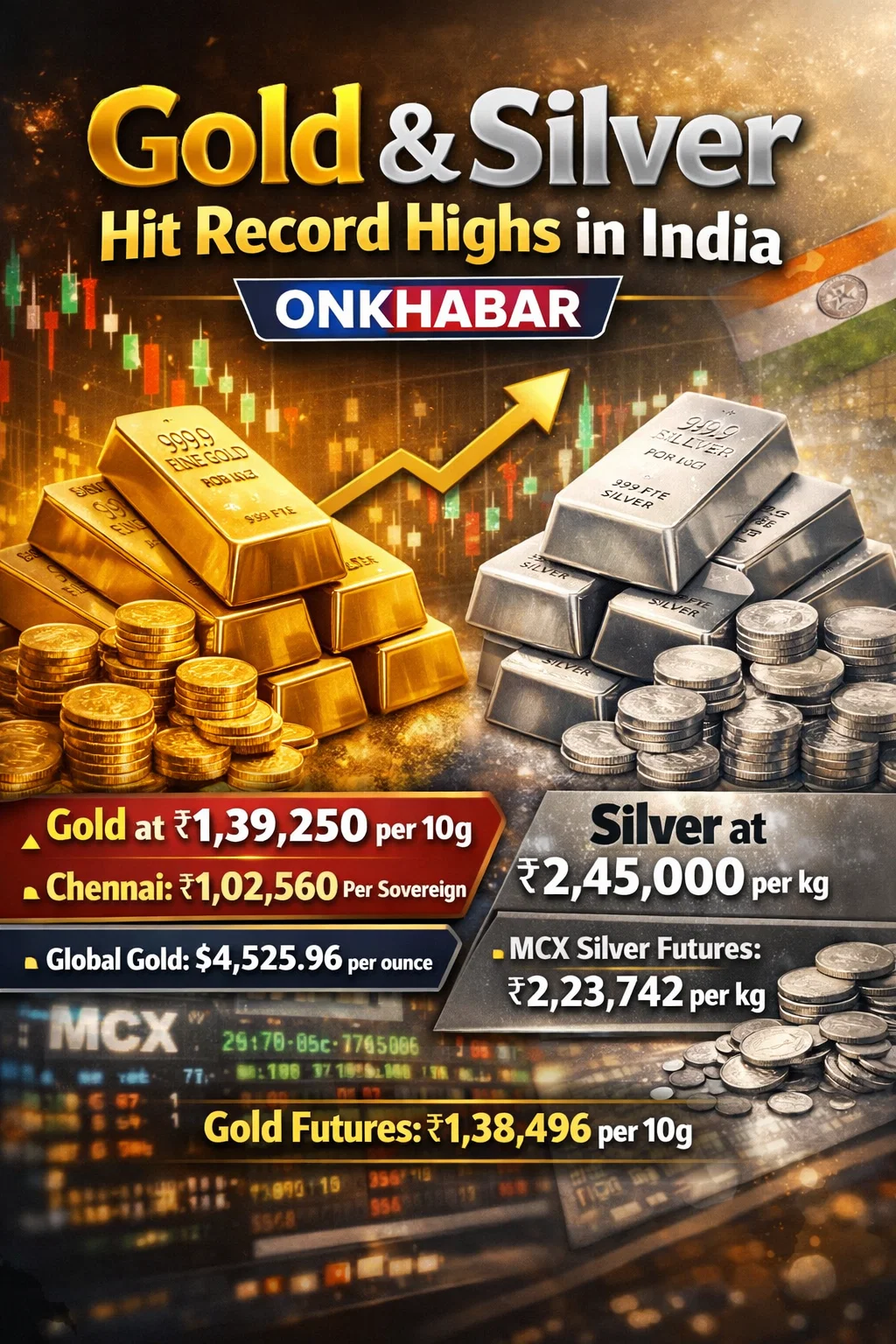
If you’ve been following the news or have any family discussion about investments and jewellery, you’ve likely heard the buzz: Gold and silver prices in India have skyrocketed to unprecedented, all-time highs. On December 25, 2024, the markets witnessed 24-carat gold hitting a staggering Rs 1,39,250 per 10 grams and silver touching an astonishing Rs 2,45,000 per kilogram.
But what’s driving this meteoric rise? Is it just a festive season spike, or are there deeper economic forces at play? More importantly, as an investor or someone looking to buy jewellery, what should you do? This blog breaks down the record surge in simple terms, explores the reasons behind it, and answers your most pressing questions.
Understanding the Record-Breaking Numbers
Let’s put the current prices into perspective:
Gold: At Rs 1,39,250/10g, the price isn’t just high—it’s historic. In Chennai, the price per sovereign (8 grams) reached Rs 1,02,560. That’s a 79.3% surge from the start of the year (Rs 57,200). In Kerala, gold crossed Rs 1,02,120 per pavan, gaining Rs 4,000 in less than a week!
Silver: Often called “poor man’s gold,” silver is shining brighter than ever, reaching Rs 2,45,000/kg in the spot market. On the Multi Commodity Exchange (MCX), silver futures hit a record Rs 2,23,742 per kilogram.
These aren’t just numbers on a screen; they represent a significant shift in the value of assets many Indian households hold dear.

The Perfect Storm: Why Are Prices Shooting Up?
The surge is not due to a single factor but a “perfect storm” of interconnected global and domestic events.
1. The Weakening Indian Rupee
This is a critical domestic factor. Gold and silver are internationally traded in US dollars. When the Indian rupee weakens against the dollar (as it has been), it takes more rupees to buy the same ounce of gold. Essentially, you’re paying a “premium” for the currency exchange, which pushes domestic prices higher even if international prices are stable.
2. Robust International Demand & Geopolitical Tension
Globally, gold is the ultimate “safe-haven” asset. During times of economic uncertainty, geopolitical conflicts (like tensions in the Middle East or Ukraine), or stock market volatility, investors worldwide flock to gold. This robust international demand drives up the dollar-denominated price of gold, which feeds directly into Indian prices. Spot gold globally was trading around $4,525.96 per ounce, reflecting this strong demand.
3. Festive and Wedding Season Demand
In India, gold buying is deeply cultural, especially during festivals (like the recent Diwali) and the ongoing wedding season. This seasonal demand creates consistent upward pressure on prices, as buyers are willing to purchase even at higher rates for auspicious occasions.
4. Inflation Hedging
With inflation concerns persistent in many economies, including India, people turn to tangible assets like gold and silver to preserve their wealth. Unlike cash, which loses purchasing power, gold has historically maintained its value over the long term.
5. Speculative Trading and Futures Market Activity
The record highs on the MCX for silver futures and near-record highs for gold futures show intense activity from traders and speculators. This futures market momentum often spills over into physical market sentiment, creating a cycle of rising prices.
Gold vs. Silver: Which Metal is Shining Brighter?
While both are hitting records, their journeys differ:
Gold is the steady, premium asset. Its surge is driven by deep-seated safe-haven demand, central bank purchases globally, and its status as a long-term store of value.
Silver has a dual character. It’s a precious metal and a crucial industrial commodity (used in solar panels, electronics, EVs). Its record run is fueled by both investment demand and strong industrial consumption, especially in green technologies.
What Should You Do? Advice for Buyers & Investors
Navigating this market requires a calm head.
For Jewellery Buyers:
Need-Based Purchase: If buying for an imminent wedding or essential ceremony, you may have little choice but to buy. Consider buying less in weight or opting for lighter, more intricate designs.
Wait for Dips: If the purchase is not urgent, adopt a wait-and-watch strategy. Prices may see corrections. Use tools like price alerts to track daily changes.
Focus on Making & Purity: At high prices, ensure you are not overpaying for making charges. Always buy from reputable, BIS-hallmarked jewellers to guarantee purity.
For Investors:
Think Long-Term: Never invest in gold or silver for short-term gains, especially at peaks. Their value is in long-term wealth preservation.
Systematic Investment Plans (SIPs): Consider Gold SIPs or Silver ETFs. They allow you to invest fixed amounts regularly, averaging out your purchase cost over time (rupee-cost averaging), which reduces the risk of buying at a single high point.
Diversify: Don’t put all your funds into precious metals. A balanced portfolio includes equities, debt, and other assets.
Avoid Physical for Large Investments: For significant investment amounts, holding physical gold comes with security and storage concerns. Opt for Digital Gold, Sovereign Gold Bonds (SGBs), or ETF units for ease and safety.
Frequently Asked Questions (FAQ)
Q1: Why did gold and silver prices hit a record high in India on December 25?
A: The record highs were driven by a combination of a weakening Indian rupee (making imports costlier), strong global demand due to economic uncertainty, domestic festive demand, and speculative trading in the futures markets.
Q2: Is this the right time to buy gold for my wedding?
A: If your wedding is soon and gold is essential, you may have to buy. To manage cost, consider adjusting the weight or design. If you have time, you could wait for a potential price correction, though timing the market is difficult.
Q3: Should I sell my old gold jewellery now?
A: If you have idle jewellery and no emotional attachment, selling at an all-time high can be a financially sound decision. Ensure you get a fair price based on purity and current rates from multiple sources.
Q4: How is the international price connected to Indian prices?
A: India imports most of its gold. The final price in India = International price (in $) converted to rupees + customs duty + GST + local margins. A rise in the international dollar price or a fall in the rupee value directly increases the domestic price.
Q5: Will the prices keep rising or crash soon?
A: No one can predict for sure. Prices are influenced by global events, rupee movement, and central bank policies. While a correction from such sharp highs is possible, the long-term trend for gold has generally been upward. Avoid speculating.
Q6: What are better ways to invest than physical gold?
A: Sovereign Gold Bonds (SGBs) are excellent. They offer digital ownership, an additional 2.5% annual interest, and no storage worry. Gold ETFs and Digital Gold platforms are also convenient and secure alternatives.
Q7: Why is silver rising so sharply?
A: Silver is benefiting from a double demand boost: 1) Investment demand as a cheaper alternative to gold, and 2) Industrial demand from the renewable energy, electronics, and electric vehicle sectors.
The Bottom Line
The record highs of gold and silver in India are a clear signal of the times—economic uncertainty, currency fluctuations, and enduring faith in tangible assets. While the numbers seem daunting, understanding the reasons behind them empowers you to make informed decisions.
Whether you’re an investor or a prospective buyer, remember the core principles: invest for the long term, never time the market, and align your purchases with your actual financial goals and needs. Precious metals should act as a stabilizer in your financial portfolio, not a source of speculation.
Stay informed, consult with trusted financial advisors, and make decisions that bring not just wealth, but also peace of mind.